To find a manufacturer for your product, describe the product in terms a factory can evaluate: material, process, dimensions, quantity, finish and intended use. Search for those capabilities, send the same brief to suitable candidates, and use their replies to decide which samples are worth buying. A factory making a similar-looking item is a lead; a factory that can explain your requirements is a candidate.
You can begin without choosing a manufacturing country. Location becomes a useful filter when it affects visits, delivery, communication or a specific supply requirement. First establish what the manufacturer needs to do.
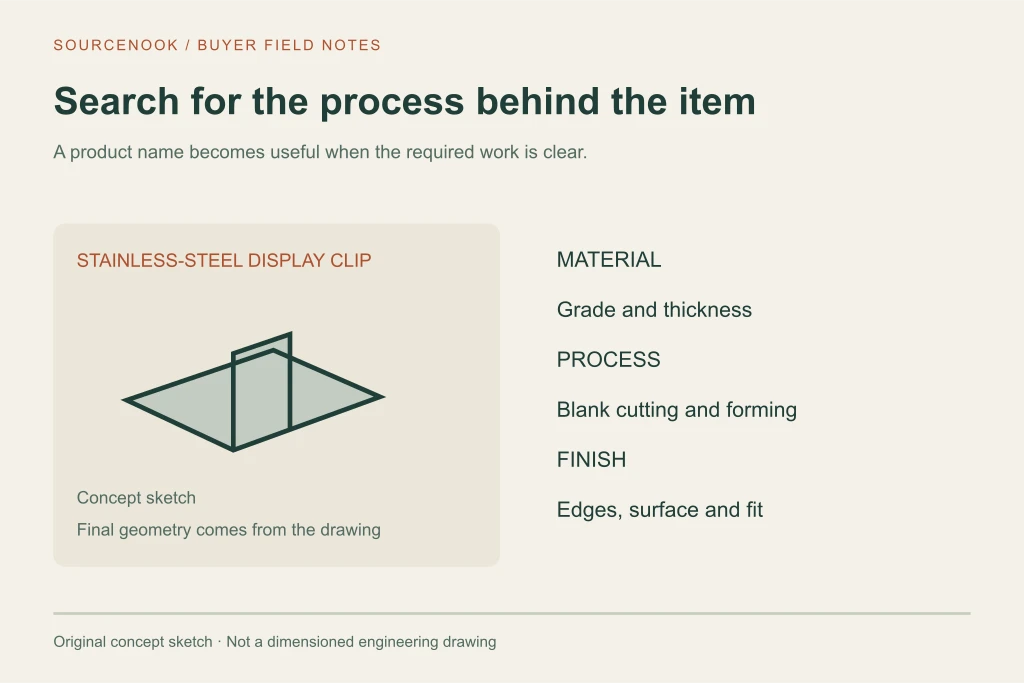
Search for the process behind the product
A search for “display stand supplier” can return wholesalers, acrylic fabricators, metal workshops and retail-fixture installers. Adding the required process narrows the work: “sheet metal display stand manufacturer” or “acrylic display fabrication” asks a much more answerable question.
If you only have a concept, first obtain help turning it into a specification or prototype. Send reference photographs with permission to use them, distinguish inspiration from required geometry, and explain which dimensions or functions matter. A manufacturer should not have to infer your functional requirements from a competitor’s product picture.
| Product requirement | Example search phrase | Question that qualifies the result |
|---|---|---|
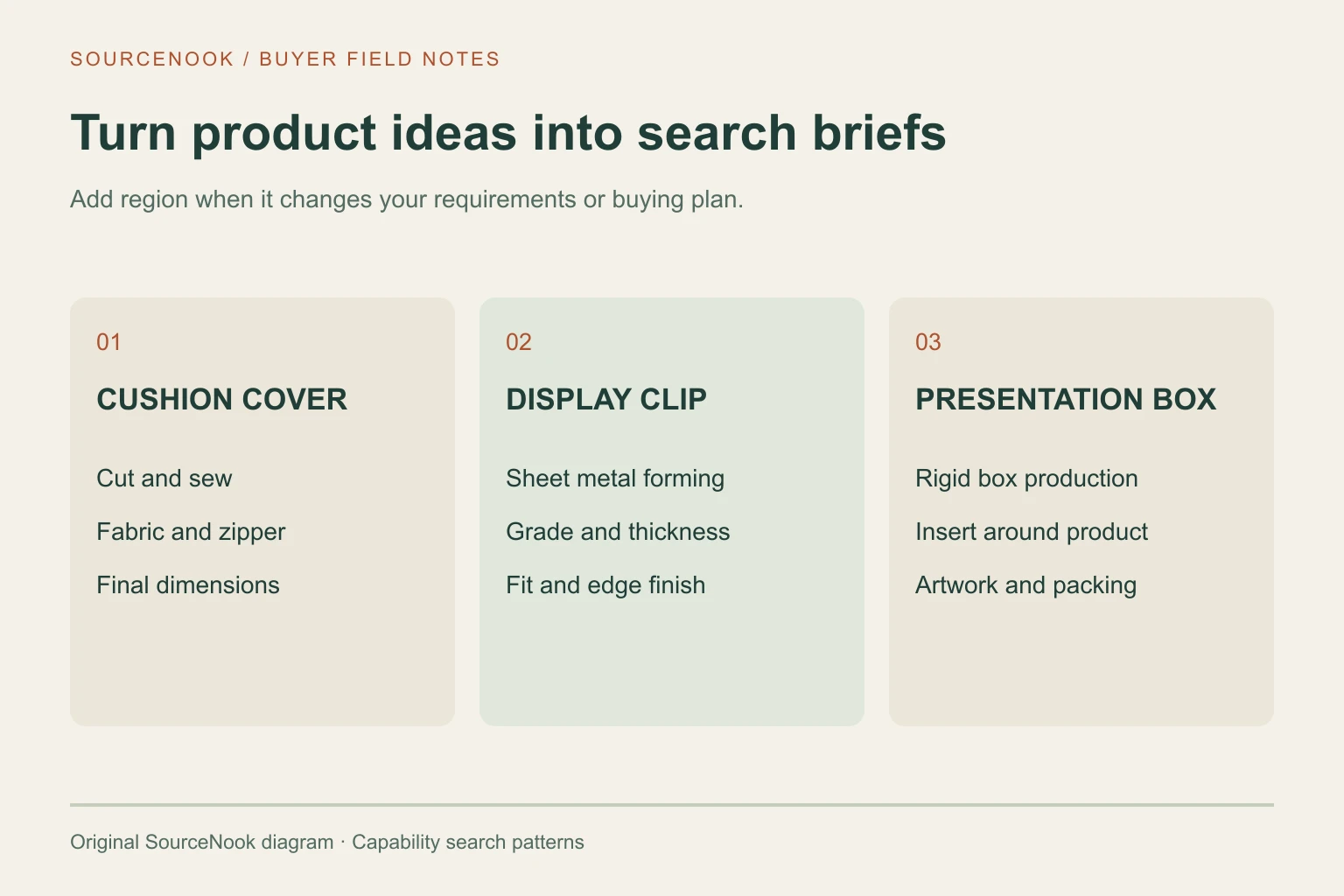
| Cotton cushion cover with a zipper | Cut and sew cushion cover manufacturer | Who sources fabric, sews the cover and checks the final dimensions? |
| Bent stainless-steel display clip | Sheet metal stamping and forming supplier | Can this geometry use existing tooling or laser-cut blanks? |
| Custom rigid presentation box | Rigid box manufacturer custom insert | Can they develop the insert around the actual packed product? |
| Own-brand version of an existing product | Private label manufacturer plus product category | Which features are standard, and which changes create new minimums? |
These phrases are search patterns, not a list of vetted manufacturers. Add your intended region when useful, then inspect the candidate’s actual process pages. If one website claims unrelated production capabilities, establish whether it operates the factories, coordinates subcontractors or resells finished goods.
Where to find manufacturers for a product
Use a combination of manufacturing directories, trade-show exhibitor lists, industry associations, referrals and business marketplaces. Record where each candidate came from so you can revisit the source. An exhibitor listing identifies a participant; the next step is still to establish what it manufactures and whether the quoted work fits its operation.
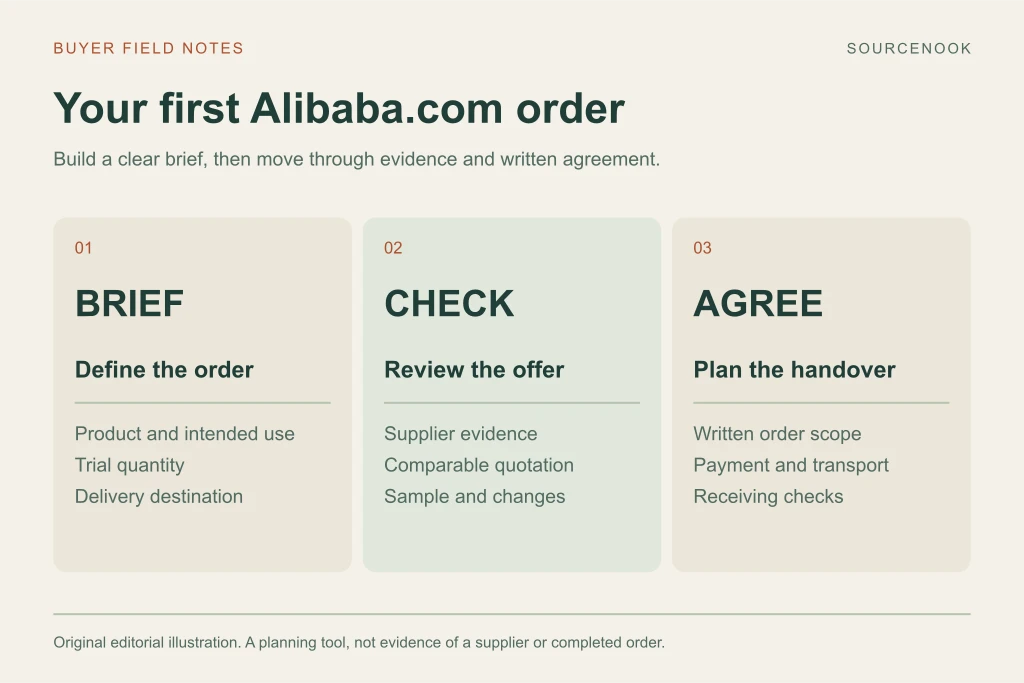
For U.S. production, NIST MEP Supplier Scouting is a concrete discovery route for matching requirements to domestic manufacturing capabilities. For marketplace-led sourcing, Alibaba.com gives you another starting pool; use the Alibaba buying guide for the order workflow. These are different channels to investigate, not equivalent endorsements of every listed supplier.
Search private label manufacturers when an existing design meets your needs and your changes concern branding, packaging or a defined variation. Search a specific fabrication or production process when you own a design. The OEM versus ODM explanation helps specify who will do the design work before you request a manufacturing price.
Send a brief that reveals fit before chasing a quote
Attach the drawing revision, material, finish, required quantity and sample purpose. Identify critical dimensions and how they will be checked. Ask the candidate to list deviations explicitly, including substitutions, tooling assumptions and outsourced steps. A clear deviation is often more useful than an unsupported “we can do everything.”
Please review drawing [reference and revision] for [quantity] units in [material and finish]. Identify any geometry or tolerance you would change, which processes you perform, and any subcontracted work. Quote prototypes, production setup or tooling, goods and packaging separately. State the assumptions needed to confirm the production schedule and the records supplied with the sample.
Compare the technical response before comparing the price. A candidate who identifies a difficult bend and proposes a review has given you a decision to make. A candidate who omits the material or prices a different thickness still owes you a comparable offer. Use the structure in our supplier inquiry template, adapting the platform-specific steps as needed.
Choose a production route for the quantity you will actually buy
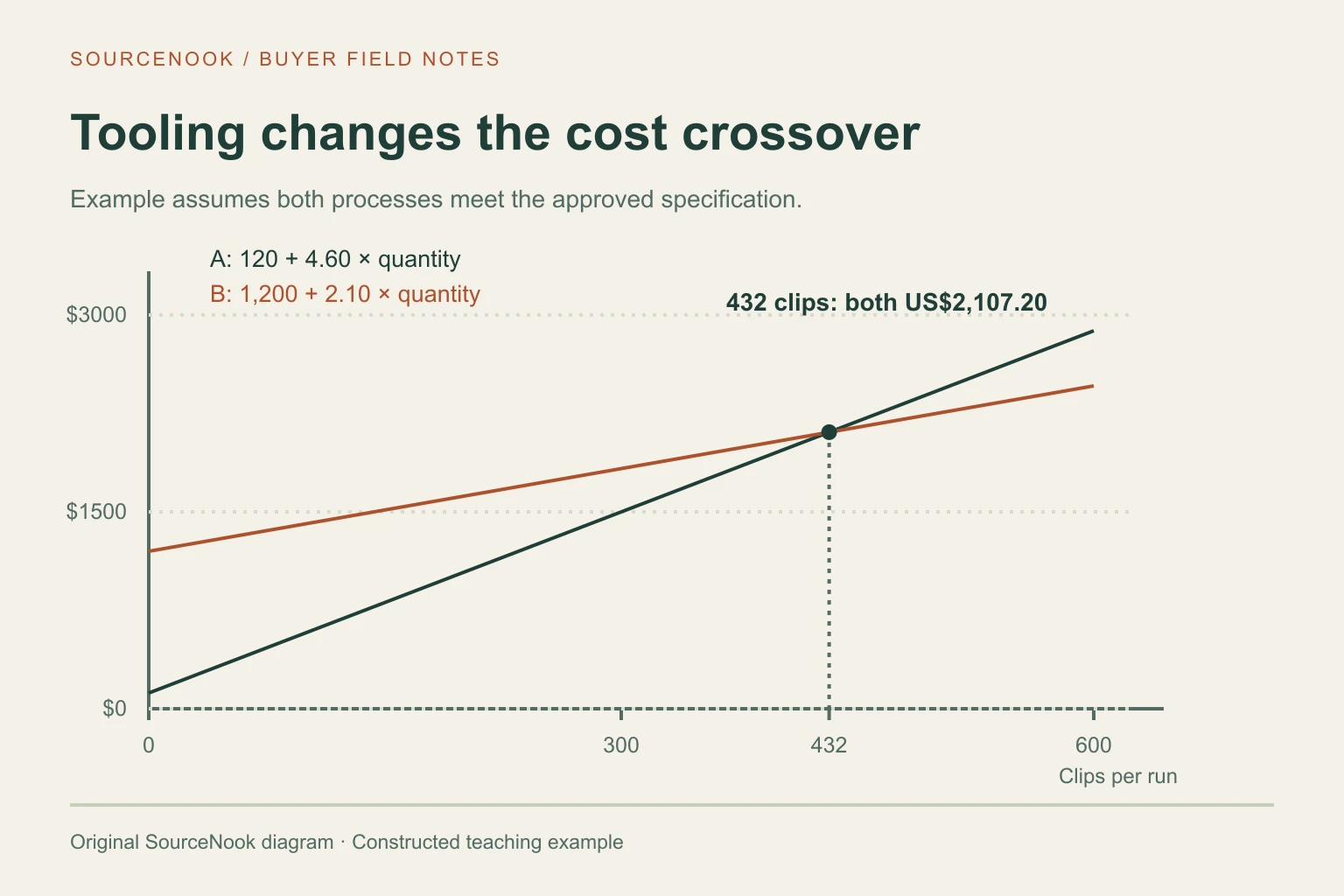
Example. You need 300 stainless-steel display clips. Two proposed routes use the same agreed grade, thickness, geometry and finish. Route A uses laser-cut blanks followed by forming; Route B uses a dedicated punching tool followed by forming. Treat the cost comparison as conditional on both routes meeting the approved sample and inspection requirements.
| Cost or condition | Route A: laser-cut blanks | Route B: dedicated tool |
|---|---|---|
| One-time setup or tooling | US$120 | US$1,200 |
| Production price per clip | US$4.60 | US$2.10 |
| Production for 300 clips | US$1,380 | US$630 |
| Setup plus production | US$1,500 | US$1,830 |
| Comparison boundary | Same packaging and handover scope; prototype work, transport, duties and taxes excluded | |
B saves US$2.50 per clip but requires US$1,080 more upfront setup. The cost crossover is US$1,080 ÷ US$2.50 = 432 clips. At that quantity both quoted models total US$2,107.20. At 300, A is US$330 cheaper; at 600, A is US$2,880 and B is US$2,460, making B US$420 cheaper.
Those calculations hold only while the quoted unit rates and one-time charges apply. Confirm price bands, tool life, maintenance, revision costs and any setup charged on each repeat order before using a lifetime volume forecast. Several future orders are not automatically equivalent to one production run of the same total quantity.
We would choose A for this 300-piece order if the design still needs market feedback and both routes pass the required checks. Choosing B needs a stronger reason, such as supported additional demand under applicable repeat-order terms. A lower piece price is not enough when the design might change before the tooling investment pays back.
Use the sample to test the difficult part
For the display clip, the question is whether the product holds the intended item without slipping, tipping or damaging its surface. Agree the relevant fit, edge and finish checks, then ask how the proposed production route will reproduce the accepted result. A beautiful finish on a sample does not settle an unresolved fit problem.
Identify whether the sample was made with the intended production process. A hand-finished prototype can answer a design question while leaving repeatability open. Record that distinction, request the appropriate next sample or process evidence, and keep approval tied to the features actually reviewed. The sample evaluation guide provides a filled review format.
Before sharing a complete technical package, agree how confidential files will be used and controlled. When custom tooling or development is involved, document ownership, storage, access and the practical conditions for moving the work. Get appropriate contract advice for those arrangements; do not leave them to a label such as “your mold.”
Build a shortlist with a reason for each next step
Keep one row per candidate: process fit, unresolved technical issue, minimum quantity, quoted scope, sample proposal and decision. Use sample next when the proposed route and commercial scope fit. Use technical clarification when a specific drawing or process question can resolve the gap. Close the inquiry when the candidate cannot meet a critical requirement and no acceptable change is available.
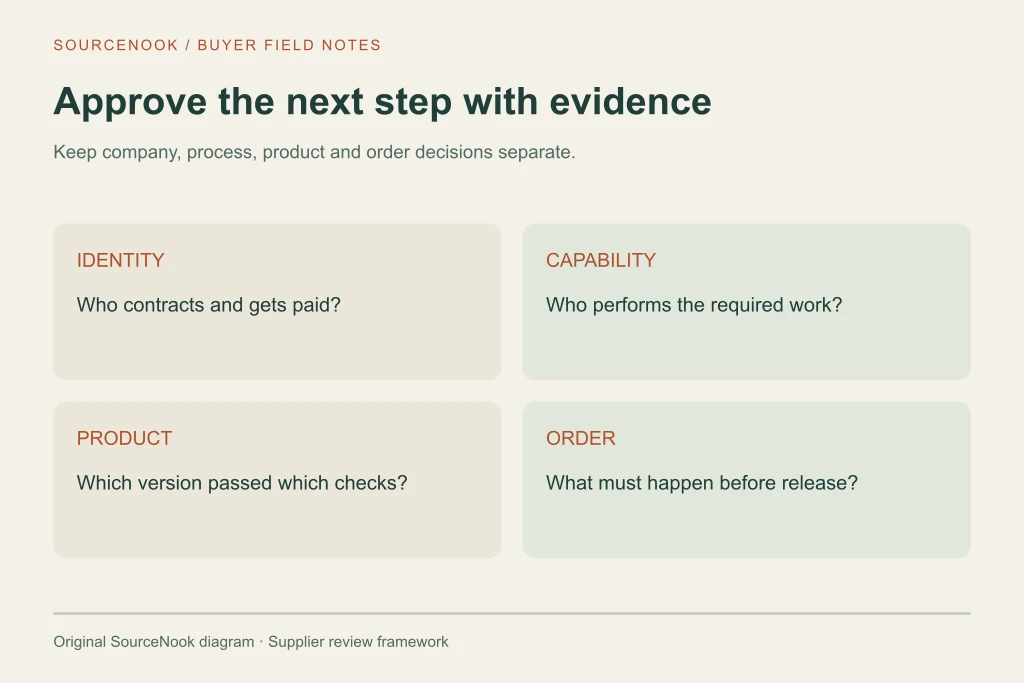
Allow a trading company to explain a useful coordination role. Direct factory access can help on detailed process questions, while an intermediary may combine specialist operations or manage communication. What matters is whether you can identify who makes the critical feature and who owns corrections. Review those relationships with the supplier vetting checklist.
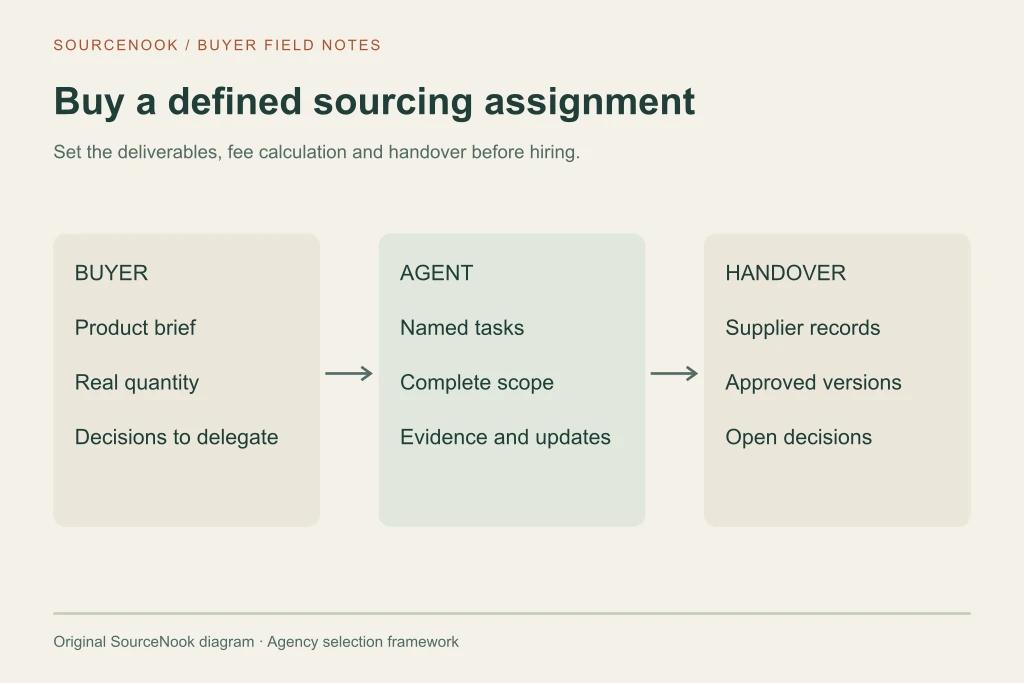
Where the search itself exceeds your capacity, compare a bounded manufacturer-finding assignment using the sourcing agent guide. Ask for a justified shortlist and records, then decide whether to delegate later stages.
Frequently asked questions
How do I find a manufacturer with a low MOQ?
Specify the trial quantity and ask which design, material, setup or packaging choice sets the minimum. Look for an existing product or a production process suited to that run size. Compare total committed cash and compromises, using our MOQ guide rather than accepting a low minimum on an unsuitable specification.
Can a manufacturer help develop my idea?
Some offer design or engineering work. Request that as a separate deliverable with the files, prototype scope, revision process and ownership terms identified. A manufacturing quotation based on your drawing and an offer to create the drawing are different purchases.
How many manufacturers should I contact?
Contact enough relevant candidates to compare viable routes and complete scopes. Stop expanding the list when further replies repeat the same options and you have candidates worth sampling. If nobody can quote, improve the brief or revisit the process before sending it to more companies.
Method. The display-clip quotations, process comparison and break-even quantities are constructed examples, not published manufacturing rates or completed purchases. Search patterns and selection decisions are editorial guidance; NIST is cited for its U.S. supplier-discovery program. Reviewed September 16, 2026.