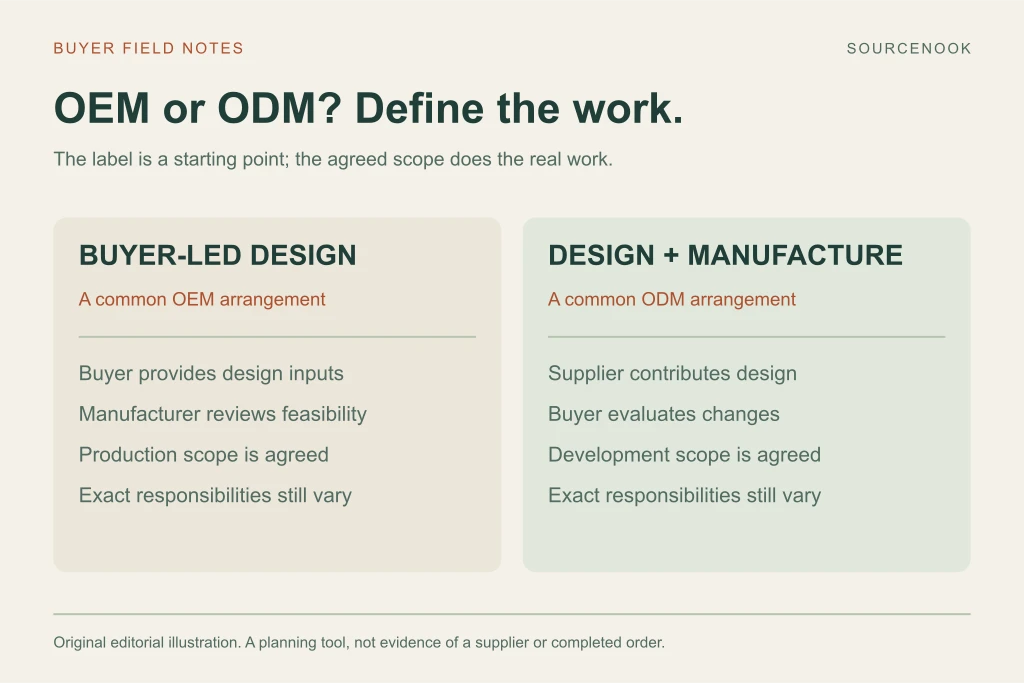
OEM means original equipment manufacturer; ODM means original design manufacturer. In a sourcing brief, the practical distinction is whether the buyer supplies the design or the supplier contributes the design as well as manufacturing.
Choose the route by the product work you need. A catalog item with your logo, a modified supplier design and production from your own drawings require different inputs, approvals and budgets. Spell out that division of work in the quotation.
OEM vs ODM: who supplies the design?
| Question | Buyer-led design route | Supplier-led design route |
|---|---|---|
| Design starting point | Buyer provides drawings or a developed specification | Supplier proposes an existing or newly developed design |
| Work still needed | Manufacturability review, production preparation and approval | Design selection, permitted changes and approval |
| Important cost question | What engineering, tooling and revision work is separate? | What customization and development work is included? |
| Important rights question | What can each party use, retain or disclose? | What design, artwork or tooling use is permitted? |
| Approval record | Versioned drawings, specification and sample | Selected design, agreed modifications and sample |
Three desk-lamp briefs with different development needs
Example. A homeware brand wants a metal desk lamp. Its three possible requests lead to different conversations:
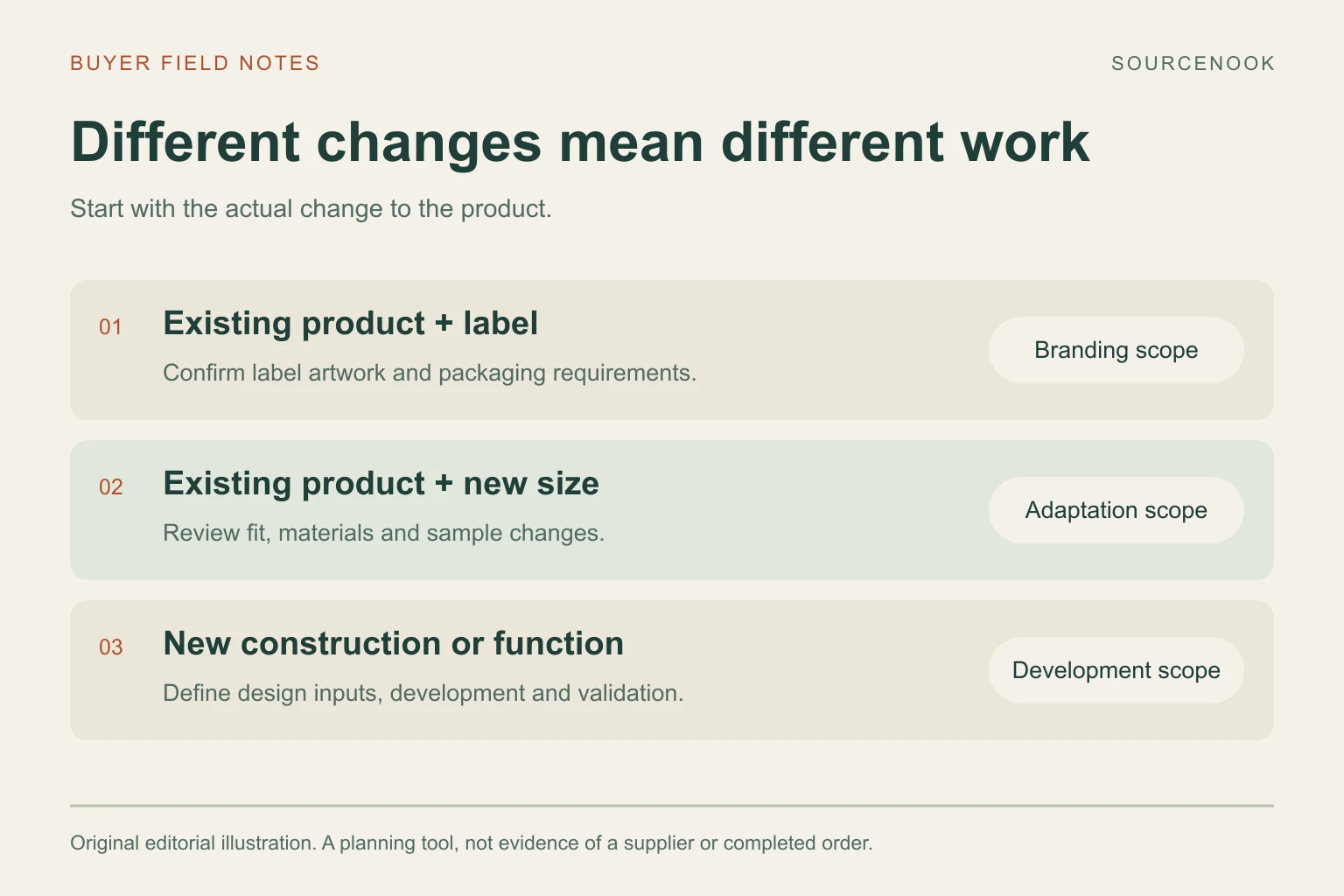
- Catalog lamp plus branding: “Quote your catalog desk lamp with our logo on the base and our printed carton. Keep the body, controls and electrical configuration as specified.” Supply the model reference, artwork, print position and destination-market requirements.
- Modified supplier design: “Adapt the selected catalog lamp with a different shade profile and adjustable hinge. Identify the drawing, prototype and tooling work, and which existing parts can remain.” Supply an annotated sketch and explain the intended movement and appearance.
- Buyer-developed design: “Review our drawings and component specification version B for manufacture. List process changes and unresolved details before quoting.” Supply dimensioned drawings, materials, finish, critical tolerances and the approval plan.
For the modified lamp, ask the manufacturer to mark the proposed hinge and shade changes on a revised drawing. Approve that version before paying for its prototype. A new shape can affect component fit and assembly, so include those checks in development rather than approving only the appearance.
A fabric organizer follows the same logic with different inputs: dimensioned panels, fabric and trim, seam details, artwork and packaging. Match the specification pack to the product and the processes it uses.
Separate product ownership from the manufacturing label
WIPO explains that industrial design protection concerns a product’s ornamental or aesthetic aspects, including shape and patterns. A lamp’s appearance therefore deserves its own rights discussion alongside the engineering and production work.
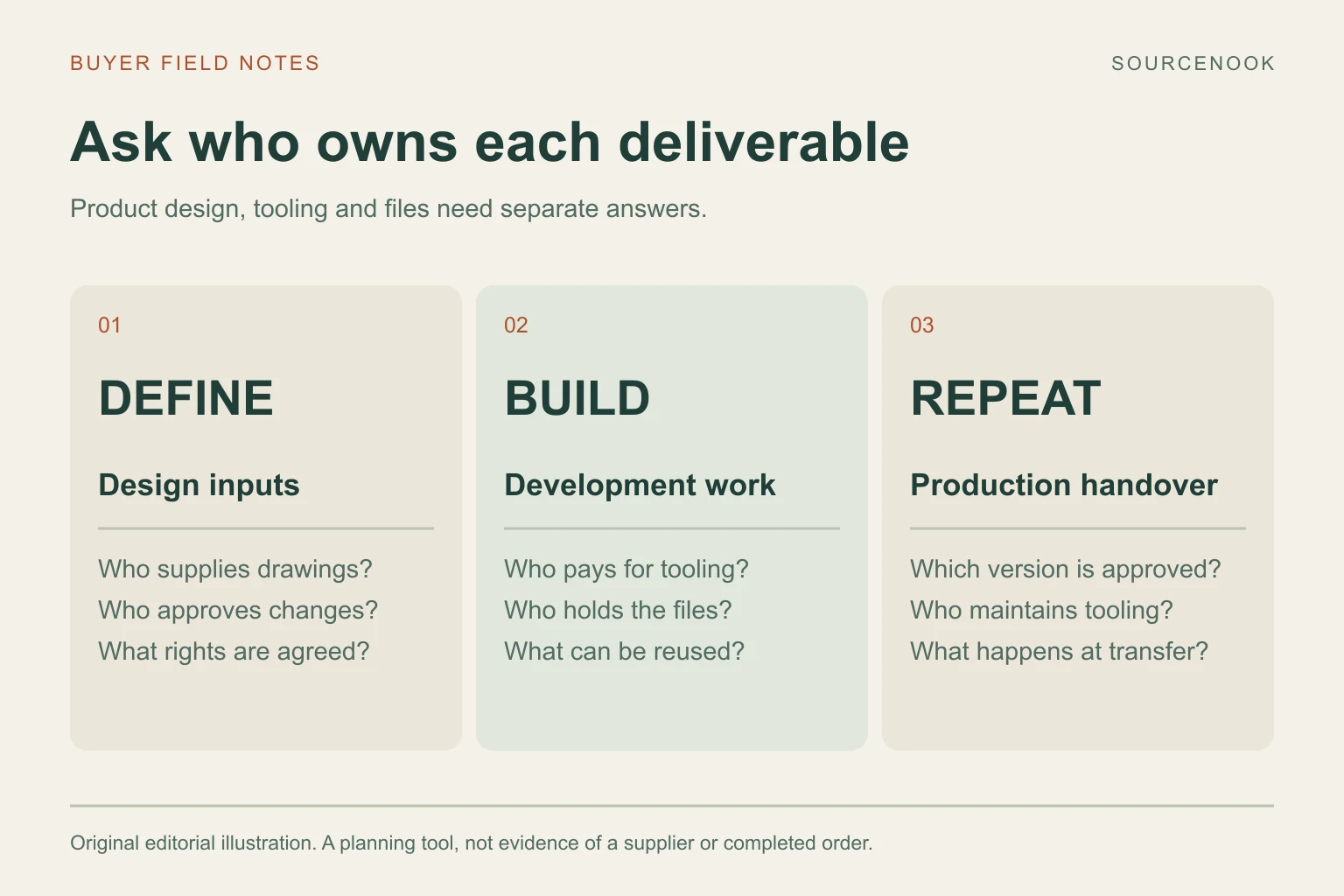
Record who supplies each drawing, who may use it, whether the supplier may sell the design to others, and what files you receive at completion. List tooling ownership, storage, maintenance, access and transfer arrangements separately. Have the proposed agreement reviewed where design rights or exclusivity are important to the business.
Ask about existing third-party designs before commissioning a close copy of a reference product. Use references to explain the features you want and document what your supplier is authorized to provide.
Break the quote into deliverables
| Stage | Define the deliverable | Clarify before proceeding |
|---|---|---|
| Feasibility | Response to the requested construction and intended use | Assumptions and unresolved technical questions |
| Design | Drawing, specification or selected catalog reference | Version control and permitted uses |
| Prototype or sample | Features represented and differences from production | Revision scope, charges and approval criteria |
| Tooling or setup | Tool or setup purpose and included work | Storage, maintenance, access and agreed rights |
| Production | Approved version, quantity and inspection plan | Substitutions, timing and change approval |
For each stage, record its price, owner, start condition and approval evidence. A prototype charge should identify the version, features represented, included revision work and what triggers an additional charge. A tooling payment should identify the tool and the agreed acceptance process.
Separate correcting a prototype from changing the brief
In the lamp example, suppose the approved drawing requires an adjustable hinge, but the prototype arrives with a fixed joint. Photograph the difference and reference the drawing version. Ask the supplier for a correction plan against that approved requirement, identifying the replacement sample, cost treatment under the agreed revision terms and revised dispatch milestone.
If the prototype meets the approved hinge requirement and you then request a wider movement range, log that as a buyer-requested change. Ask which drawings, components, tooling and checks it affects. Obtain the added work, price and schedule before approving the new version. Agree correction and change-request terms in advance so the discussion can refer to a shared scope.
Keep the current prototype’s accepted features in the review record while the hinge issue is resolved. Approve the revised drawing and sample when they satisfy the agreed criteria; hold production-tooling or volume-production approval while a required feature remains open. If the proposed process cannot produce the hinge your product depends on, choose a feasible redesign or a different manufacturer before committing to tools.
Choose the smallest useful development project
If the first test is whether customers like the finish and form, a suitable existing design may be enough. If your selling point is the adjustable hinge, keep the hinge in the prototype scope. Removing the feature that matters would leave the buying decision unanswered.
Stage the tooling commitment around the evidence the development process can provide. Where a functional prototype can be made without production tooling, use it to resolve critical design questions first. Some processes require a prototype tool to make representative parts: Protolabs describes this approach for prototype injection molding. Separate that tool’s purpose, price and acceptance criteria from later production tooling. Agree design-review, correction and buyer-change responsibilities before work starts, so an approved drawing and a failed part can be assessed against the actual scope.
Compare one-time development charges and production pricing separately. Use the MOQ cash-commitment example when a lower unit price requires more stock. Set sample approval criteria for the features you are developing.
Send the selected brief through the supplier inquiry template. During the capability review, confirm who performs design, tooling, assembly and any outsourced operations.
Frequently asked questions
Is ODM cheaper than OEM?
A usable existing design can reduce new design work. Compare the actual modification, sample, tooling, licensing and production charges for your brief. A supplier-designed product with extensive changes can still require a substantial development budget.
Does private label mean ODM?
Private label concerns selling under your brand. OEM and ODM discussions concern design and manufacturing responsibilities. Ask exactly what changes: a label and carton, the product itself, or both. Put those deliverables into the order.
What should be ready before production?
An approved specification and sample version, agreed materials and components, a quantity and packing plan, and a record of how changes will be approved. Close unresolved prototype issues before authorizing the version for production.
Method. The manufacturing labels are practical sourcing descriptions; the agreed scope determines each project’s responsibilities. Examples and diagrams are constructed teaching material, rather than supplier quotations or completed purchases. Reviewed September 15, 2026.