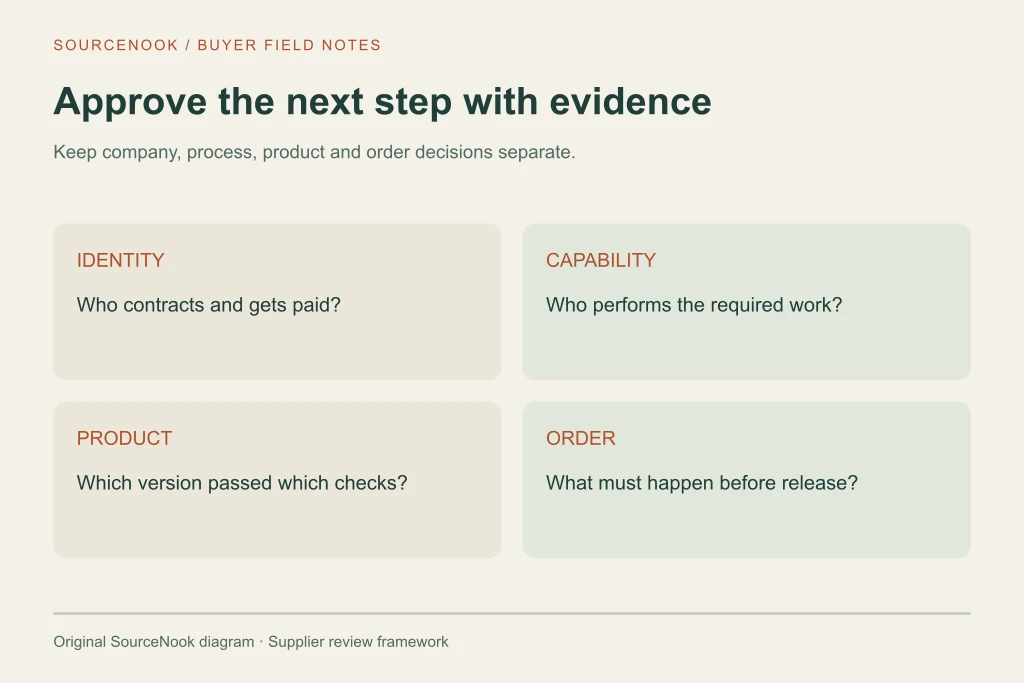
Supplier vetting means checking whether a particular business can supply your particular order, then recording what is approved and what remains unresolved. Separate company identity, process capability, product evidence and order controls. A useful result is a decision such as “ready for a sample” or “packaging revision required,” with the evidence that supports it.
This checklist works whether you found the supplier through a marketplace, a trade show, a sourcing agent or a direct search. Platform-specific reports belong inside that review. They should answer a named question rather than replace the whole decision.
Start with the commitment you are about to make
Before buying a sample, establish who is selling it, what it will represent and why the supplier is a plausible fit. Before commissioning tooling, settle the development scope and relevant ownership and handover arrangements. Before releasing a production order, close the specification, sample and commercial questions needed for that stage.
Matching the review to the commitment prevents two expensive habits: doing a large audit before confirming basic product fit, and spending on production while essential evidence is still pending. Put the proposed spend or approval at the top of the review sheet so the reviewer knows what decision the evidence must support.
| Check | Record to compare | Action when it does not match |
|---|---|---|
| Business identity | Legal name, registration details, quotation and proposed contract | Resolve the company relationship before contracting or paying |
| Production responsibility | Site, required processes and outsourced operations | Identify who performs and controls the critical work |
| Product and packaging version | Specification, drawings, sample and relevant documents | Request the correct version and repeat affected checks |
| Commercial scope | Quantity, inclusions, change approval and delivery arrangement | Reconcile missing lines before selecting the offer |
| Order execution | Milestones, approval owner, inspection scope and payment details | Keep the dependent commitment pending until its gap is closed |
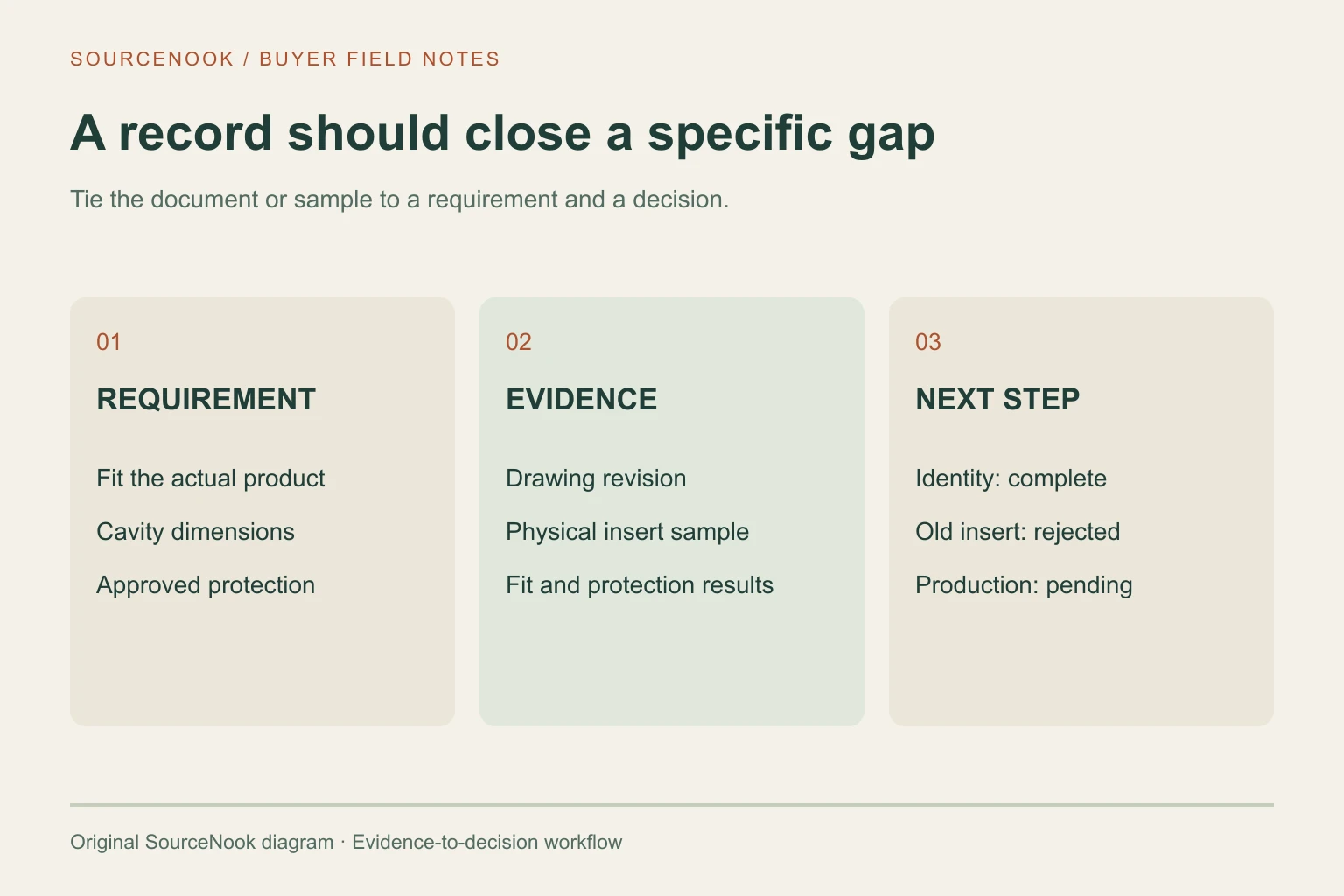
Verify the entity and the work behind the name
Use the registration details for the supplier’s jurisdiction and compare the legal entity with the quote and proposed agreement. For a UK company, Companies House records provide information including registered address, officers and filing documents. Save the record reference and the date you checked it. A trading name may legitimately differ from the legal name; document that relationship instead of guessing from matching logos.
Next, trace the operations central to your brief. For a presentation box, separate board cutting, wrapping, printing, insert production and final packing. Ask which are performed in-house, which are subcontracted and who approves changes. The question is especially important when the quoted business arranges rather than performs production.
Use references to investigate the same kind of work. With permission, ask a previous business customer about the relevant product scope and how corrections were handled. Record the limits of the reference: a successful stock purchase gives different evidence from a custom development project.
Read certificates and assessment reports for their actual scope
Record the issuer, entity, site, covered activity, status and date. A certificate naming one business or activity needs to match the claim being evaluated. ISO’s certification guidance explains that external bodies issue certificates and describes verification through the relevant bodies or IAF CertSearch. Use a verification route appropriate to the specific certificate.
A quality-management-system certificate answers a system question. Keep your product’s dimensions, materials, performance and destination-market requirements as separate checks. If a technical report is needed, match its scope to the exact product and configuration, and have the applicable requirements reviewed by a suitably qualified specialist.
For Alibaba-specific badges and facility reports, use our Alibaba supplier verification guide. It contains the detailed facility-assessment and product-document examples, so you can apply those checks here without turning every review into a second copy of the same report.
The box supplier passed the company check but failed the fit check
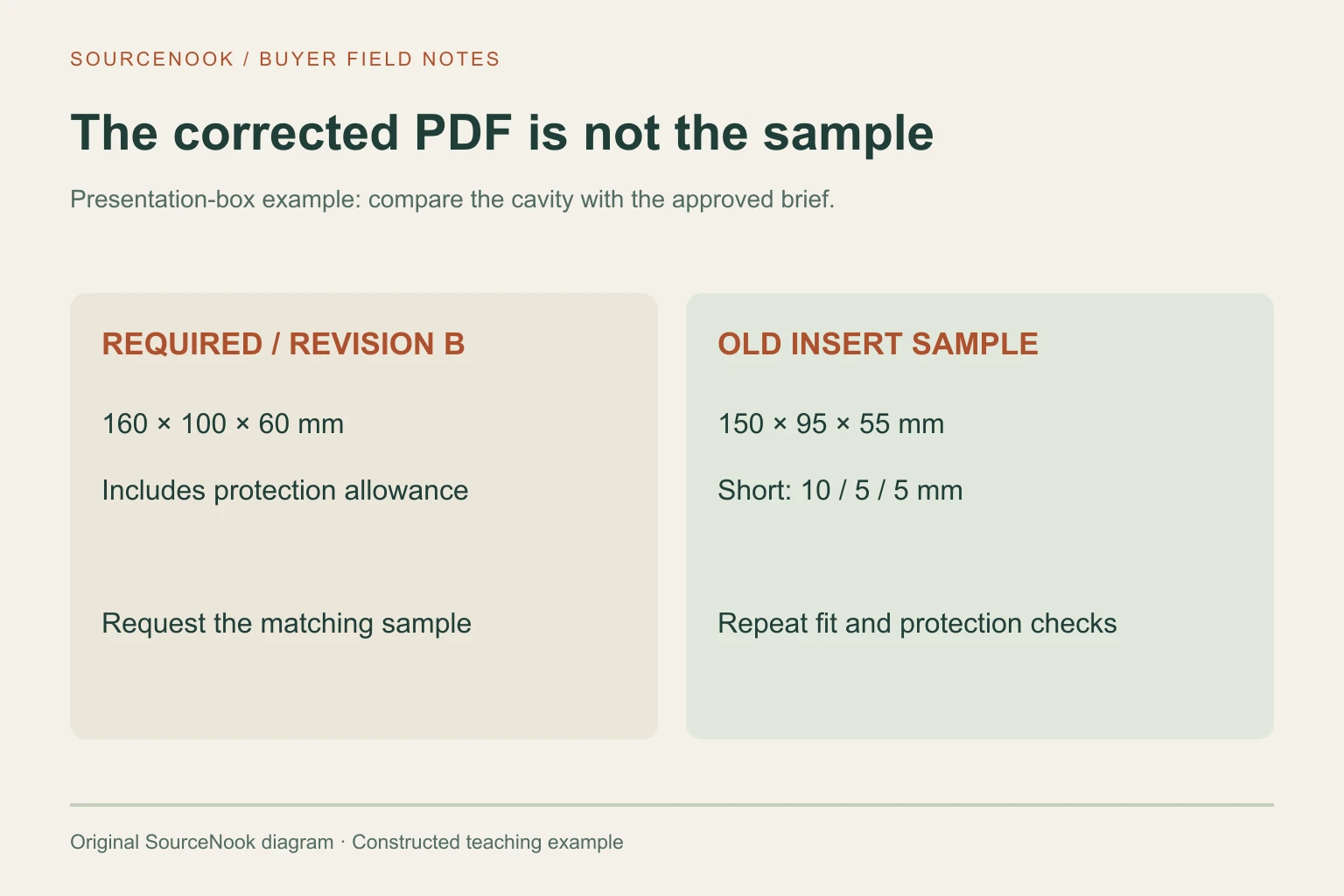
Example. A homeware brand is buying presentation boxes for a ceramic ornament. The approved drawing specifies an internal cavity of 160 × 100 × 60 mm. It includes the buyer’s allowance for the ornament and its protective material. The box supplier’s registration and process information are consistent, but the submitted sample uses an older insert with a 150 × 95 × 55 mm cavity.
That sample is short by 10 mm in length and 5 mm in both width and depth. The supplier sends a new PDF with the correct dimensions. The document corrects the drawing record; it does not change the physical sample on the buyer’s desk. Request the revised insert and repeat fit and protection checks using the actual product.
| Review item | Evidence and result | Next decision |
|---|---|---|
| Company identity | Registration details match the contracting entity | Identity check complete for this record |
| Sample cavity | 150 × 95 × 55 mm; required 160 × 100 × 60 mm | Reject this insert version for the order |
| Revised drawing | Correct dimensions appear in revision B | Use revision B for the replacement sample request |
| Replacement sample | Awaiting physical fit and protection review | Production packaging approval remains pending |
| Production instruction | Must reference the accepted insert and artwork revisions | Release after the relevant approvals are recorded |
Suppose 400 incorrect inserts were ordered and a replacement insert costs US$0.45. Replacing them would add US$180 in insert costs alone, before handling, transport or any schedule effect. The calculation is 400 × US$0.45; there is no assumed defect probability or claim that checking guarantees a saving.
We would keep the box supplier in consideration if it can produce and document a satisfactory correction, but keep this packaging commitment pending until the replacement is accepted. The useful distinction is between a supplier worth continuing with and a specific version ready for production. One need not imply the other.
Copy this evidence-log structure
Give each open item an owner and a decision. A status word without the missing evidence makes it too easy to close a question after receiving any new attachment.
Supplier and legal entity: [name]. Product and revision: [reference]. Decision requested: [sample/tooling/production/payment]. Requirement: [measurable condition]. Evidence: [file, issuer or source, date]. Finding: [what matches or differs]. Status: [ready for named stage / clarification needed / hold]. Next evidence or correction: [specific item]. Owner and review date: [person and date]. Closure: [new evidence and resulting decision].
For the box example, “send packaging details” is too broad. Write “send a revision B insert sample with the required cavity; buyer to check the actual ornament and protection before packaging approval.” When it arrives, preserve the earlier discrepancy and add the result. This shows why the decision changed.
Use gates for essentials before ranking preferences. An unresolved product requirement cannot be canceled out by a high score for friendly communication or low price. Once candidates pass the necessary checks, compare the remaining tradeoffs: price, response quality, delivery scope and the work your team must perform. The product sourcing guide puts those tradeoffs into a first-order budget.
Reopen the affected check when something changes
Vetting continues through the purchase. A new production site, material substitution, packaging change or payment instruction creates a fresh question. Reopen the relevant approval and identify which other decisions depend on it. In the box example, changing the insert material can affect fit and protection even if the drawing dimensions stay the same.
When payment details change unexpectedly, verify through an established contact or account using information held before the request. Keep the payment paused while the beneficiary relationship is unresolved. Our supplier verification guide explains this control alongside company and order records.
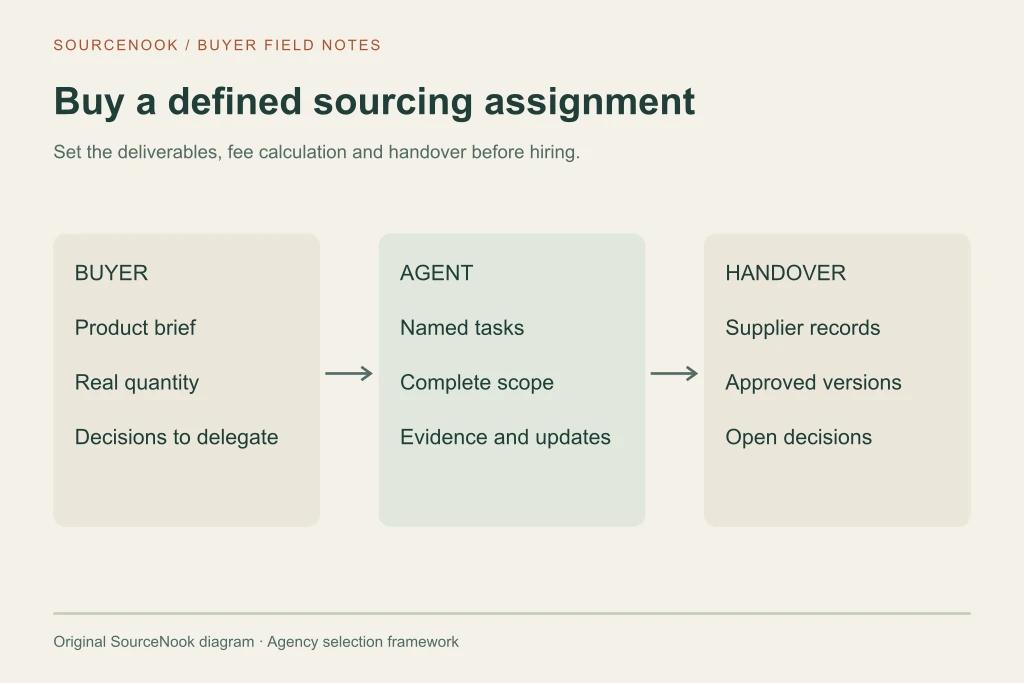
For repeat orders, compare the new quote and specification against the accepted revision, then check whether the site, process or delivery scope changed. Reuse relevant evidence and refresh what has changed. If an agent performs the review, define the records you receive using the sourcing service scope guide.
Frequently asked questions
What is the difference between supplier sourcing and supplier vetting?
Supplier sourcing finds candidates for a requirement. Vetting evaluates a candidate and records whether it is ready for the next commitment. Use the manufacturer search guide to build the candidate list, then use this checklist to investigate it.
Do all suppliers need a factory audit?
Choose a review that resolves the material uncertainty in the order. Identity records and samples can answer some questions; process or facility uncertainty may justify a scoped assessment. Specify the question before buying an audit, and compare the report with the actual site and work proposed.
Can I approve a supplier if some checks remain open?
Approve a defined next stage when its essential checks are complete. In the packaging example, it is reasonable to request a corrected sample while production approval remains open. Record the outstanding issue and avoid a blanket “approved supplier” label that hides the limitation.
How often should I repeat supplier vetting?
Set a review schedule appropriate to the product and relationship, and trigger additional checks when relevant facts change. A new factory, specification, certificate status or payment entity can matter more than the calendar alone. Record the check date so future reviewers know which evidence they are using.
Method. The packaging review, dimensions and US$180 replacement calculation are constructed teaching examples, not supplier findings or measured savings. The checklist is our editorial workflow; linked official sources support company-record and certification-verification steps. Reviewed September 16, 2026.